

Finding the Perfect Lip Shape for Your Face
Sep 15, 2025
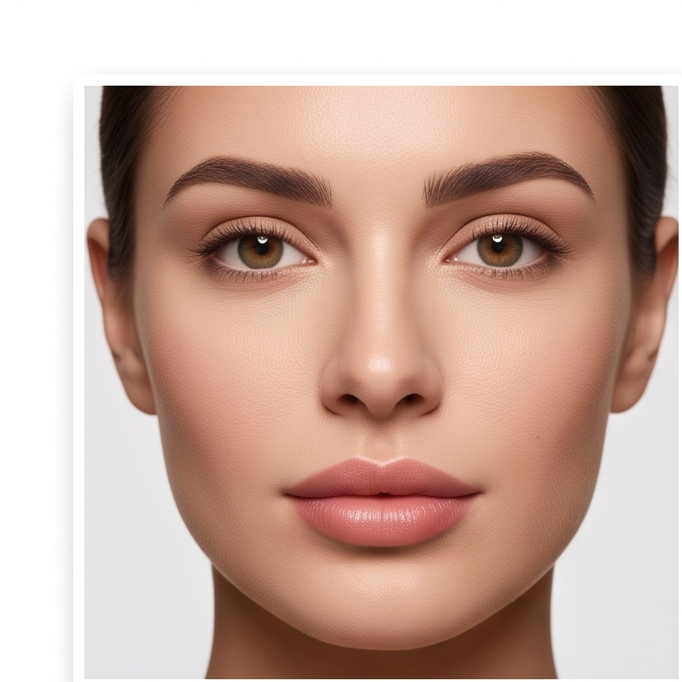
When people imagine improving their lips, they often picture a single "ideal" shape they've seen on someone else. But the most beautiful lips aren't the ones that copy a trend. They're the ones that belong on your face. Finding the perfect lip shape is really about balance: how your lips relate to your eyes, cheeks, jawline, and smile. This guide walks you through the principles of facial harmony so you can enhance what makes you, you.
Why Lips Should Suit the Whole Face
Your face is a composition, and every feature plays a part. Lips that look stunning in isolation can feel out of place if they overwhelm your other features or clash with your natural bone structure. Facial harmony means your lips read as a natural extension of your face rather than the first thing someone notices.
Injectors and artists think in terms of balance: lips should complement the width of your smile, the fullness of your cheeks, and the proportions of your midface and chin. The goal is quiet confidence: features that work together, not any one part shouting for attention.
The Ideal Upper-to-Lower Lip Ratio
A commonly cited guideline for balanced lips is a ratio of roughly 1:1.6, meaning the lower lip is a little fuller than the upper lip. In practice, if your upper lip has one "unit" of volume, the lower lip carries about one and a half. This subtle difference is what makes lips look natural rather than flat or top-heavy.
It's worth remembering that this is a starting point, not a rule. Some faces suit a more even balance, and preferences vary across individuals and cultures. What matters is that the two lips feel proportional to each other and to your face, not that you hit an exact number.
The Cupid's Bow and Its Role
The Cupid's bow is the double curve at the center of your upper lip, named for its resemblance to an archer's bow. A well-defined Cupid's bow gives the mouth structure and character, framing the two peaks that sit just below the nose. Some people naturally have a sharp, sculpted bow; others have a softer, rounder one.
When considering lip shape, the Cupid's bow is a key landmark. Defining or gently lifting it can add refinement, but over-sharpening it can look artificial. The best result keeps the bow in keeping with the rest of your lip: defined enough to notice, natural enough to believe.
How Lip Shape Interacts With Face Shape
Your overall face shape influences which lip proportions feel most harmonious:
- Round faces often suit lips with a defined border and a slightly more structured shape, which adds contrast to soft, curved features.
- Oval faces are considered the most versatile and pair well with a wide range of balanced lip shapes.
- Heart-shaped faces (wider forehead, narrower chin) tend to look balanced with fuller lower lips that add weight toward the lower face.
- Square faces with a strong jaw often harmonize with softer, gently rounded lips that echo, rather than compete with, the angles.
These are gentle guidelines, not prescriptions. Your individual features always come first.
Consider Your Smile and Tooth Show
Lips are dynamic. They move when you talk and smile, so a shape should look good in motion, not just at rest. Pay attention to how much of your teeth shows when you smile and how your upper lip lifts. Adding too much volume to the upper lip can reduce tooth show or change how your smile looks.
A shape that flatters your resting face but flattens your smile isn't the right shape. The best plans account for how your lips behave across expressions.
Respecting Ethnic and Individual Diversity
Beautiful lips come in enormous variety, and standards of beauty differ meaningfully across cultures and ethnicities. There is no single template. Naturally fuller lips, more delicate lips, sharply defined bows, and soft rounded shapes are all lovely in their own right.
The healthiest approach honors your natural features and heritage rather than trying to erase them. Enhancement should feel like a refined version of your own lips, not a departure from who you are.
Common Goals to Consider
When thinking about your lips, it helps to name what you actually want to change. Common goals include:
- Adding volume where lips feel thin or have lost fullness over time.
- Improving symmetry when one side sits differently from the other.
- Defining the border for a crisper, more sculpted edge.
- Lifting the corners to soften a downturned or tired-looking mouth.
Knowing your specific goal makes the whole process clearer, for you and for anyone helping you plan.
Why Proportion Matters More Than Size
It's tempting to think bigger lips automatically look better, but proportion is what the eye actually reads as attractive. Well-balanced lips at a modest size look far more natural and elegant than oversized lips that ignore the ratio between upper and lower, or between lips and face.
Chasing size for its own sake is how results start to look done. Chasing proportion is how they look effortless. When in doubt, prioritize balance over volume.
How to Communicate Your Desired Shape
Clear communication is the difference between a result you love and one that surprises you. Describe your goals in terms of shape and balance rather than naming a celebrity, say "a fuller lower lip" or "a more defined border," not "I want their exact lips." Bring reference points that show proportions you like, and be honest about how subtle or noticeable you want the change.
A good injector will assess your natural anatomy, tell you what will suit your face, and set realistic expectations. The more specific and grounded your description, the more likely the outcome matches what you imagined. Above all, aim to enhance your own features, the version of your lips that looks unmistakably like you.
Planning ahead?
Use Lipsy to visualize your potential lip filler results before your appointment. Seeing what to expect helps you feel confident and communicate clearly with your injector.